
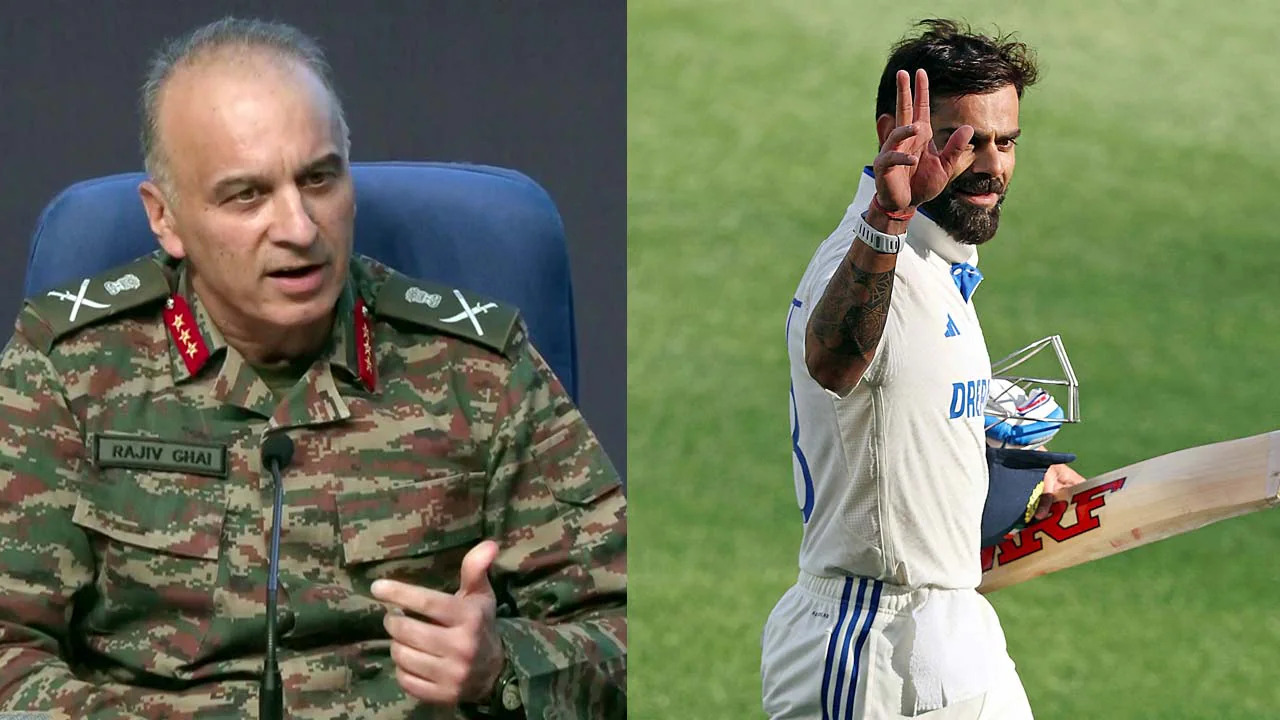
After numerous instances of cross-border raids of Pakistan Air Force (PAF) bases by the Indian armed forces as part of Operation Sindoor, Virat Kohli announced his retirement from Test cricket just one day after a ceasefire between India and Pakistan was declared.
In a briefing today, May 12, Indian Director General of Military Operations (DGMO) Rajiv Ghai explained how India’s multi-layered counter-drone and air defence grid prevented the army and PAF from damaging Indian military installations and air bases by using cricket as an example.
Speaking about India’s defence grid during the press briefing, DGMO Ghai remarked, “This diagram reminds me of the Australian team in the 1970s when they played a Test series against England.”
I was at school at the time. It was in the 1970s. In those days, Australia and England were involved in a series.
He managed to include the announcement of Kohli’s retirement and mentioned that he is his favourite cricket player in this. While describing the effectiveness and intricacy of India’s defence systems, the DGMO also referenced the well-known saying, “Ashes to ashes, dust to dust.”
Given that Virat Kohli recently retired from Test cricket, perhaps it is appropriate to discuss cricket today.
He is my favourite cricket player, like many Indians,” the DGMO remarked.
Therefore, Australia came up with the saying, “Ashes to ashes, dust to dust, if Thommo don’t get ya, then Lillee surely must,” when two Australian bowlers, Dennis Lillee and Jeff Thomson, decimated England’s batting order during the 1970s Ashes Test series.
You’ll see what I mean if you look at the layers of our defensive grid. This grid system will hit you before you target our airfields or logistical infrastructure, even if you have gotten past some of its layers. It’s far too difficult to target our airfields and logistics.
Notably, a few days before Kohli did, Rohit Sharma too declared his retirement from Test cricket.





 India
India

