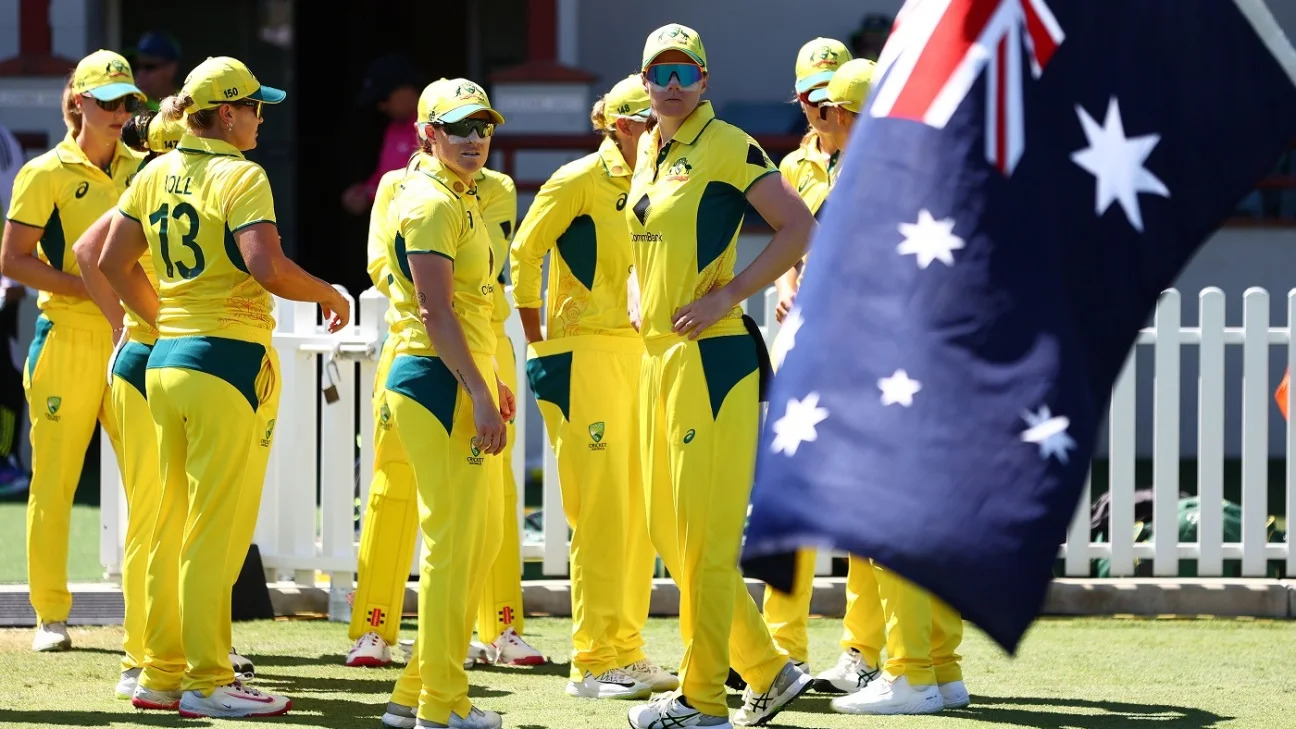
For many international cricketers, India is becoming a second home these days, but despite their growing familiarity with the country, Australia is bracing for the unknowns at the forthcoming women’s ODI World Cup.
Given the variety of sites, it is a predicament that will confront all of the competition’s participants, including joint-hosts India to some extent. The Holkar Stadium in Indore has never hosted women’s internationals, Guwahati’s Barsapara Stadium has never staged women’s one-day internationals, and its last women’s T20Is were in 2019, while Visakhapatnam’s previous ODIs were in 2014. Navi Mumbai, the late replacement for Bengaluru, has hosted Tests and Twenty20 Internationals but has yet to host the 50-over format in women’s cricket.
There is also the Premadasa Stadium in Colombo to consider. The venue has held seven women’s ODIs this year, including matches against Sri Lanka, India, and South Africa, but Australia, who will face Sri Lanka and Pakistan, last played there in 2016, when only five members of the current squad were on tour.
Head coach Shelley Nitschke stated last week that she has sought out to the men’s team for assistance in data collection, notably referring to Colombo,
Australia played two spin-dominated ODIs earlier this year, and the players are aware that they will need to be adaptable throughout the tournament.
“We’ve been very fortunate; it feels like we’re going to India every second month,” vice-captain Tahlia McGrath said ahead of Australia’s three-match ODI series against India, which begins on Sunday in New Chandigarh. “We’ve spent a lot of time over here and played in these conditions before, but we’re playing in some unfamiliar territory.
“[We are] in New Chandigarh right now, and we have never been here before, as well as to many of the World Cup stadiums. So it’s about knowing the conditions, adapting to them, being adaptable, and communicating effectively as a group because it’s new to us.
“No matter where you are in India, you can get thrown up very different conditions from day to day, so excited about the challenge, [we have] a little bit of experience, but a little bit of unknowns.”
“It’s about learning the conditions, adapting to the conditions, being flexible and communicating really well as a group because it is a little bit foreign to us.”
The series against India will be Australia’s first internationals since the Ashes finished in early February but McGrath was confident the stability of the squad will serve them well.
“We’ve been pretty settled with our squad for quite a while now, so we’ve been pretty lucky with that,” she said. “The only thing is, though, we’re over here for a very long time and I think we’ve got 15 in the World Cup squad and 17 over here at the moment, so it’s a really good opportunity to play a few players, play some different roles.
“Not sure what Shell’s got in mind, but we’ve got so much talent, so much depth over here that it doesn’t really matter what team we throw out or what batting order, all that sort of thing, we’re in pretty good hands.”
Sophie Molineux, a left-arm spinner, is scheduled to miss the India series as she recovers from knee surgery, but she will be ready for the World Cup. The untested wicketkeeper Nicole Faltum and allrounder Charli Knott have been included for the bilateral series, but barring injuries, they may not play in what is an opportunity to get more experience in the squad.
When the World Cup begins, Australia will be looking to become the first team since 1988 to defend the ODI crown, although the memories of their semi-final setback in last year’s T20 World Cup linger.
“An ODI World Cup is special, they’re probably the pinnacle,” McGrath told the BBC. “For the guys that were in Dubai, it adds a little drive; it wasn’t a good feeling how we left. And then there’s the added drive of wanting to be the first side in a long time to win consecutive ODI World Cups.”
 India
India